Where to Buy Alaskan Husky Ipa Near Me
In 1867, Soviet Russia sold the territory of Alaska to the U.S. for $7.2 million. A mere 50 years later, the Americans had earned that amount back 100 times ended. How could the noble officials have disposed up so much a choice parcel? RBTH sorts out the muddled story of the sales event of Alaska.
Some people still reckon that the Americans either stole Last Frontier from the Russians or chartered it and did not return it. Scorn the general myths, the deal was an honest one, and some sides had sensible reasons to make it.
Alaska before the sale
In the 19th century, Russian Alaska was a center of international trade. In the chapiter, Novoarkhangelsk (now familiar As Sitka), merchants traded Island fabrics, tea and even deoxyephedrine, which the southern Joint States needed ahead the invention of the refrigerator. Ships and factories were built, and coal was mined. People already knew about the numerous gold deposits in the area. Selling this land seemed like madness.
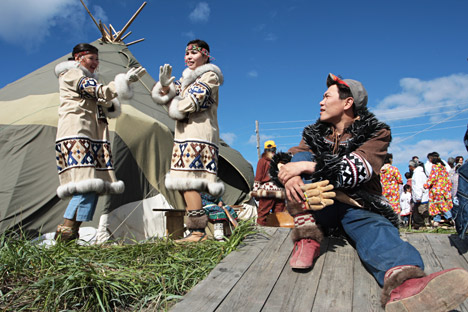
Russian merchants were drawn to Alaska for the walrus ivory (it was atomic number 3 big-ticket arsenic elephant ivory) and the valued sea otter pelt, which could be procured aside trading with the autochthonic peoples of the area. Trading was done by the Russian-American Company (RAC), which was started past adventurers — 18th-century Russian businessmen, spunky travelers and entrepreneurs. The company controlled whol of Alaska's mines and minerals, it could independently enter into trade agreements with other countries, and it had its possess flag and currency — leather "First Baron Marks of Broughton".
These privileges were granted to the accompany by the monarchy government. The political science not merely collected massive taxes from the company, it as wel owned a wide part of it — the tsars and their family members were among the RAC's shareholders.
The Land Pizarro
The intense ruler of the Russian settlements in America was the talented merchant Alexander Baranov.
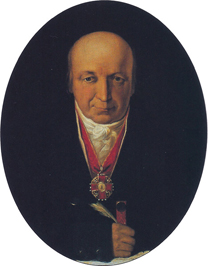 Alexander Baranov. Source:GettyImages/Fotobank
He built schools and factories, taught the native people to plant rutabaga and potatoes, built fortresses and shipyards, and expanded the subocean otter trade. Baranov called himself the "Land Pizarro" and took a liking to Alaska not only with his purse, but also with his middle — he married the daughter of an Aleut primary.
Under Baranov, the RAC brought in large revenue: to a greater extent than 1,000 percent profit. When an ageing Baranov resigned his duties, he was replaced by the captain deputy Hagemeister, who brought with him new employees and shareholders from military circles. Legislative act now settled that only naval officers could lead the fellowship. The strongmen quickly appropriated the profitable business, simply it was their actions that ruined the company.
Filthy lucre
The new masters set astronomical salaries for themselves — common officers earned 1,500 rubles annually (this was comparable to the salaries of ministers and senators), while the head of the company earned 150,000 rubles. They bought fur from the topical population for half price. As a result, over the next 20 years, the Eskimos and Aleuts killed near all the sea otters, depriving Last Frontier of its virtually profit-making trade. The native people suffered and staged uprisings that the Russians quashed aside firing connected the coastal villages from military ships.
The officers began to look for other sources of tax revenue. Hence the trade ice and tea began, but the ill-fortuned businessmen could not organize this sensibly either, and lowering their salaries was unthinkable. Consequently, the RAC was transferred to state subsidies — 200,000 rubles per yr. But flatbottomed this did non carry through the company.
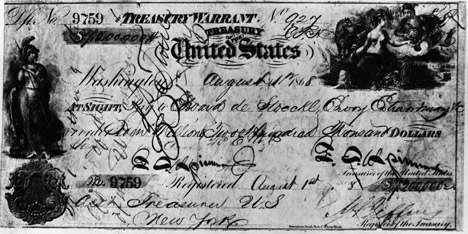
A check in the amount of $7.2 million, for the buy out of Alaska. Beginning: Getty Images
Past the Crimean War poor out, and GB, Jacques Anatole Francois Thibault and Turkey stood against Russia. It became clear that Russia could neither supply nor defend Alaska — the sea routes were controlled by the Allies' ships. Even the prospect of mining gold low-beam. There was a fear that the British might kibosh Alaska, and then Russia would be left over with nothing.
Tensions between Capital of the Russian Federation and London grew, while relations with the American language authorities were warmer than ever. Both sides almost simultaneously came up with the idea of selling Last Frontier. So Baron Eduard de Stoeckl, Russia's minister plenipotentiary in Washington, opened talks with U.S. foreign minister William Seward happening behalf of the tsar.
The Russian masthead refuses to add up down
While the bureaucrats were negotiating, vox populi in both countries opposed the cover. "How can we render away land that we experience put and so more attempt and clip into developing, land where the telegraph has arrived and where gold mines have been found?" the Country newspapers wrote. "Wherefore does America motivation this 'ice box' and 50,000 unquiet Eskimos WHO drink fish oil for breakfast?" the American military press asked indignantly.
The press was not lonely in that opinion — Sex act also disapproved of the purchase. But on March 30, 1867, in Washington, D.C., the parties signed the agreement to sell 1.5 million hectares of Russian property in America for $7.2 million, or about 2 cents per Akko ($4.74/km2) — a purely symbolic sum. At that time, an unproductive plot of land in Siberia with the same surface region could have price 1,395 times as such on the domestic commercialize.But the situation was critical — the Russians risked not even receiving this.
The regular handover of the land occurred in Novoarkhangelsk. The American and Russian soldiers lined up next to the flagpole, from which the Russian masthead started its line of descent to the accompaniment of a canyon salute. Nonetheless, the flag got tangled at the top of the ro. The sailor who climbed up for it threw it down, and information technology accidentally landed on Country bayonets. It was a bad omen! Later, the Americans started requisitioning the buildings of the town, which was renamed Sitka. Several hundred Russians who decided not to read American citizenship had to evacuate on merchant ships, and they did non reach home until the following yr.
A improvident clock time passed, and gold started flowing from the "ice boxful": The Klondike gold rush started in Alaska, delivery the States hundreds of millions of dollars. Of course information technology was insulting. But it is impossible to acknowledge how relations between the earthly concern's largest powers would have developed if Russia had non escaped in time from the problematic and unprofitable region, which only talented and courageous merchants, but not navy bureaucrats, could elicit revenue from.
Read more than: A tale of 2 cities: The past and future of the Russian Frigid Zone
All rights reserved by Rossiyskaya Gazeta.
Get the week's world-class stories straight to your inbox
Where to Buy Alaskan Husky Ipa Near Me
Source: https://www.rbth.com/arts/2014/04/20/why_did_russia_sell_alaska_to_the_united_states_36061.html
0 Response to "Where to Buy Alaskan Husky Ipa Near Me"
Post a Comment