Josef Albers in Mexico Exhibit at the Metropolitan Mus Of Art Mnyc
When the Nazis closed the Bauhaus in 1933, Anni Albers and her husband, Josef, left Deutschland to accept an invitation to teach at Black Mountain College in N Carolina. Ever fascinated with Pre-Columbian art during their time in Europe, the pair ofttimes drove to United mexican states, where they found a "land for fine art like no other." Though not much was known nigh these civilizations, both Anni and her married man found a deep resonance with the timeless geometric design that was left behind.
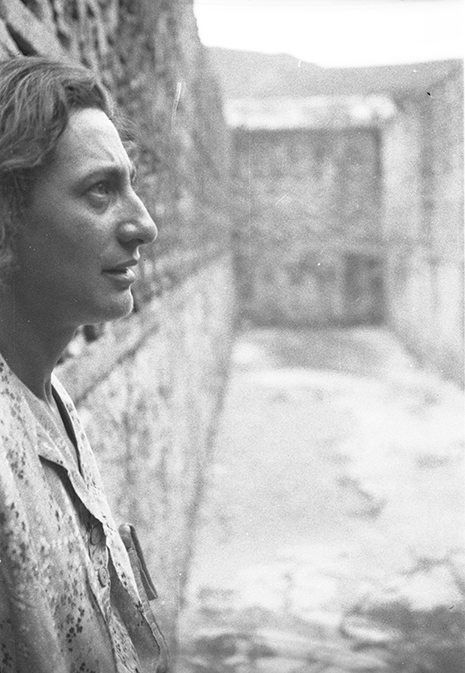
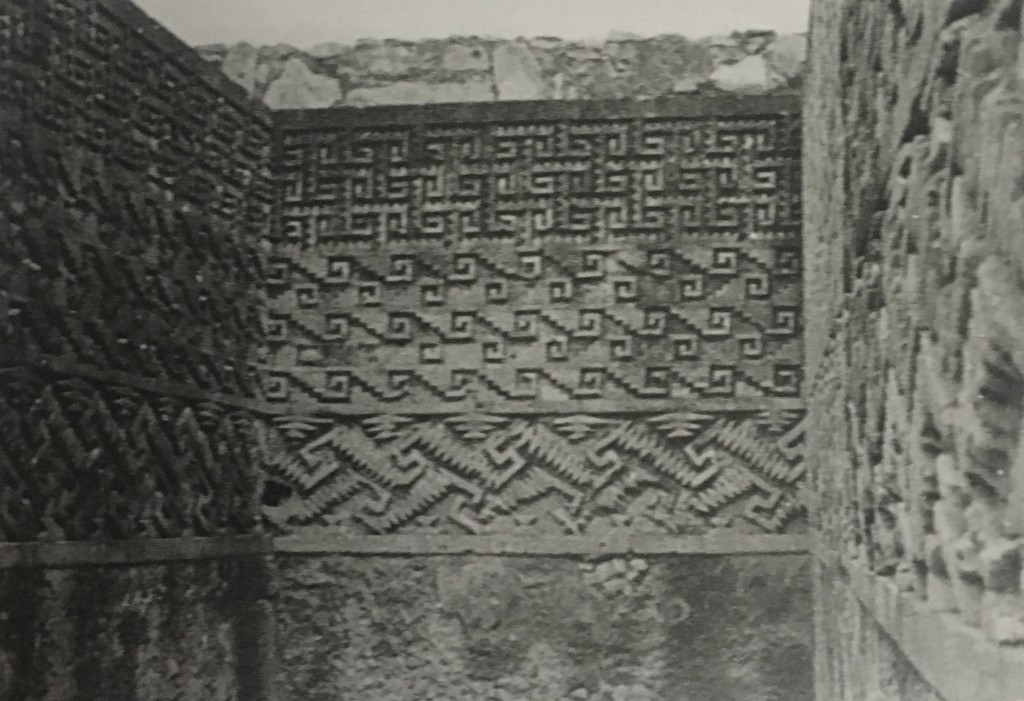
In relation to the recent exhibition, Josef Albers in Mexico at the Guggenheim Museum in New York, Anni Albers's piece of work also finds itself (unsurprisingly) heavily influenced past the art and architecture the couple encountered in United mexican states and S America. They toured widely through the country, consistently returning to Mitla, Oaxaca, and Monte Albàn. Discovering the value of the hand-crafted cloth of Mexican and South American art, Anni discovered the "bang-up teachers" of her practice and worked to evidence the dependency of art on craft and tactile sensibility.
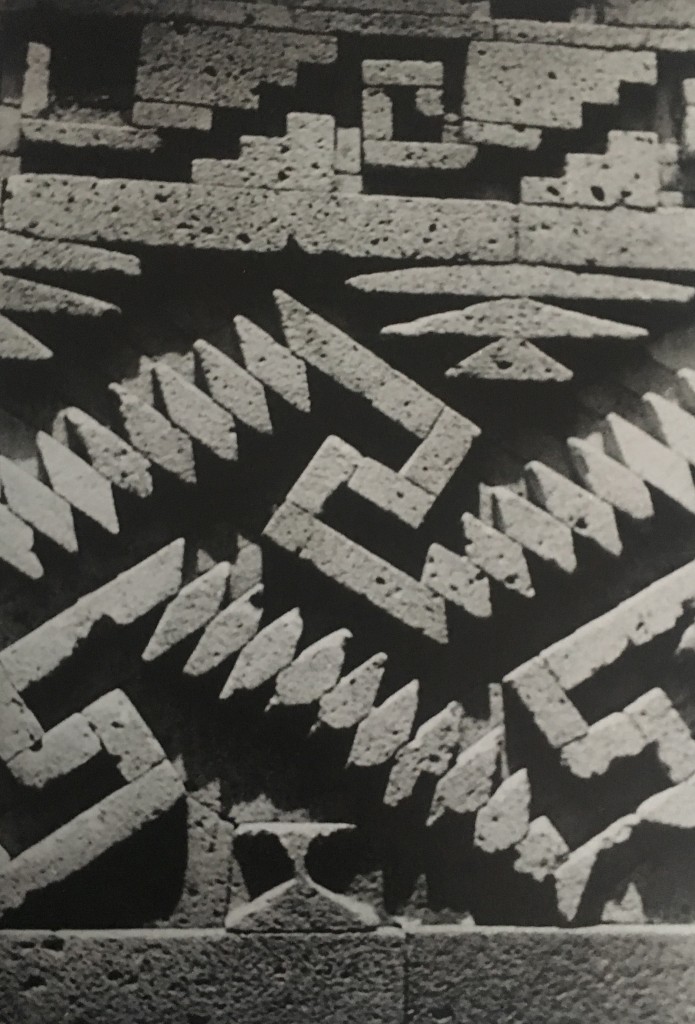
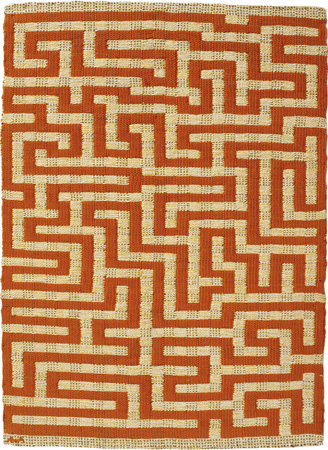
During her fourth dimension in United mexican states and Peru, Anni began a collection of ancient fabrics and discovered several traditional weaving techniques. She responded to the timeless, abstract forms and visual language of the aboriginal textiles. For Anni, accessing these ancient techniques and working closely with raw materials brought her closer to the importance of physically creating and experiencing her practice.
Albers believed the tactile sense—our sense of touch—must be trained to speak the linguistic communication of structure.
Anni had a philosophy almost the tactile sense she felt so strongly attuned to and the modernistic insensitivity to it. Through the rise of industry, "we remove a cellophane wrapping, and at that place it is-the bacon," she writes. In that location is no sense of arts and crafts, but the concluding production. Opposite to what she was taught in her time at the Bauhaus, Anni emphasized the importance of the textile she used in her work. In the same style an artist is trained to understand the language of color by sight, she believed the tactile sense—our sense of touch —must exist trained to speak the language of structure.
In weaving, Anni never limited herself to cotton or linen. Instead, she accessed plastic, metal, and wire as material to be woven. Through the juxtaposition of various materials in a single work, Albers was able to alter the perception of the surface. Anni saw worth in material through their chapters for visual outcome. Material impacted the final impression of the work, all while sharpening her haptic sense.
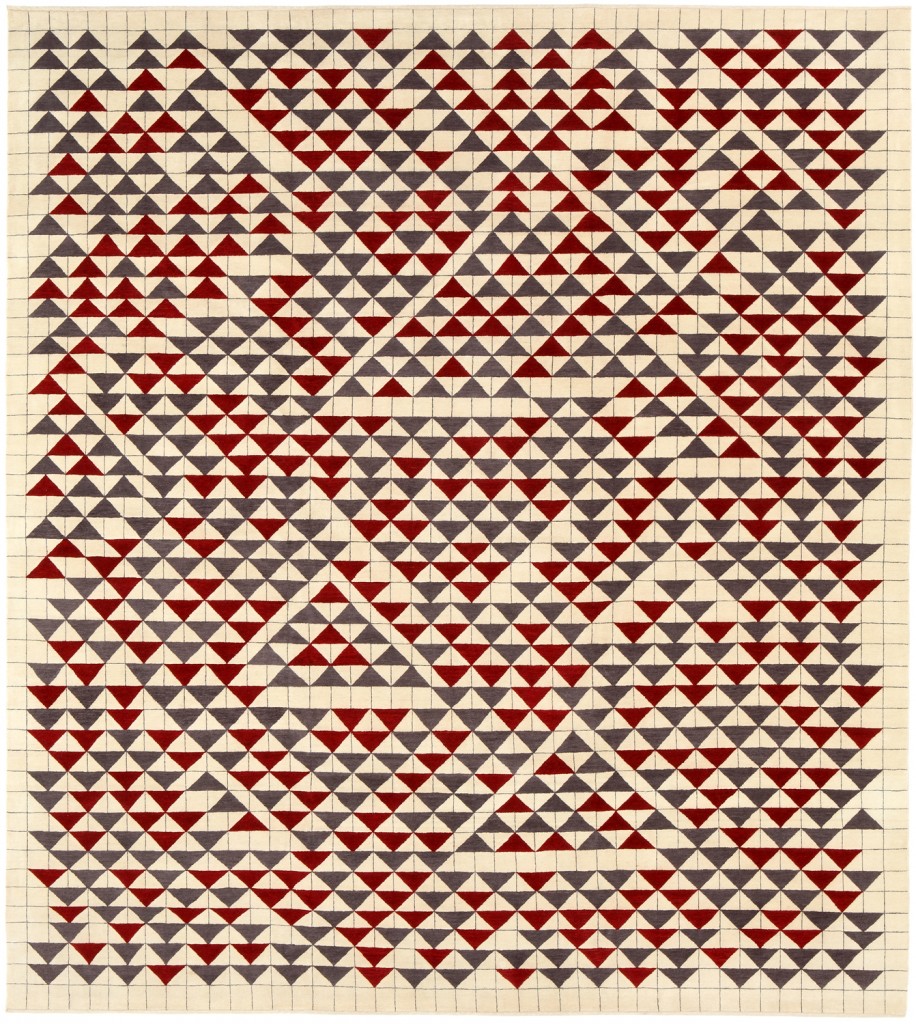
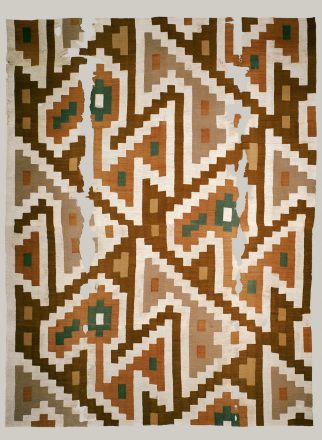
Albers met Alex Reed - a student - at Black Mount College. Upon his graduation in 1940, Reed worked closely with both Anni and Josef. Working with household items, Reed and Anni created a collection of jewelry during a time period afterwards World War Ii when materials were short in supply.
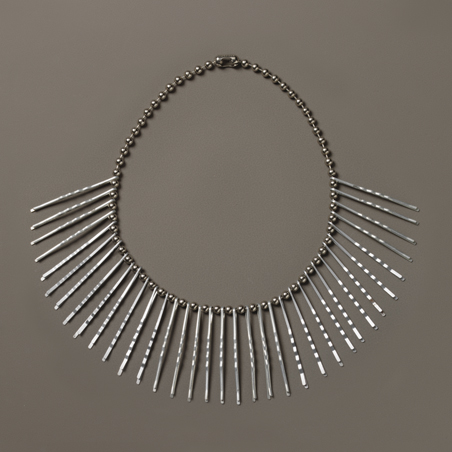
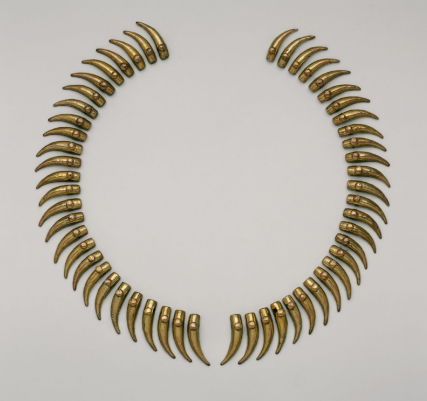
Upon visiting Oaxaca in Mexico, the two were exposed to the jewelry of Monte Albán, composed of materials which were both precious and common. A mixture of gold, pearls, seashells and pebbles - the two approached jewelry as form rather than value. They achieved designs that embodied the aboriginal aesthetic and questioned the merit of precious versus not-precious materials as well equally the purpose of everyday items.
Textile was a quality that drove Albers's career. She saw material as something to spend fourth dimension with and as a formal element which gave significant to the final piece of work. Anni believed "nosotros touch things to assure ourselves of reality."
Sources:
Albers, Anni. On Weaving. Princeton Academy Printing, 2017.
Dickson, Andrew. "Anni Albers: Picking Up the Thread". The New York Review of Books, 21 Nov. 2017. http://www.nybooks.com/daily/2017/11/21/anni-albers-picking-upwardly-the-thread
Glover, Christina. "Anni Albers'due south Modernist Philosophy in Thread and Text". Florida State Academy Libraries, 22 Mar. 2012. https://fsu.digital.flvc.org/islandora/object/fsu:185061/datastream/PDF/view
Hinkson, Lauren & Joaquin Barríendos. Josef Albers in United mexican states. Guggenheim Museum Publications, 2017.
Logan, Liz. "Unraveling the Abstract Weavings of Anni Albers". Introspective Mag, 30 Oct. 2017. https://world wide web.1stdibs.com/introspective-magazine/anni-albers-touching-vision
Parsons, Elly. "All About Weave: A New Show Threads Together Anni Albers' Artistic Ambidexterity". Wallpaper, twenty Oct. 2017. https://www.wallpaper.com/fine art/anni-albers-touching-vision-retrospective-guggenheim-bilbao
Peterson, Becky. "Anni Albers's Thoughts on Textiles Loom Large". Hyperallergic, 21 February. 2018. https://hyperallergic.com/428089/anni-alberss-thoughts-on-textiles-loom-large
Simenc, Christian. "Anni Albers, the Thread of Life". L'Oeil, 18 Jan. 2016, https://www.abeautifulconfluence.com/press/2016_01_00_l_oeil_magazine_eng.pdf
Source: https://textileartscenter.com/feature/anni-albers-material-and-meaning/
0 Response to "Josef Albers in Mexico Exhibit at the Metropolitan Mus Of Art Mnyc"
Post a Comment